August 19, 2015

Who Is On Your Diabetes Care Team? - Part 1

Many people do not have a diabetes care team, yet when I ask them if they have an eye doctor and a dentist, most admit they do have these doctors. Then I have to ask if they have even told the eye doctor and dentist that they have type 2 diabetes. Some admit they have not and some say why should they let these doctors even know this. This attitude I do not understand as they should have informed them after diagnosis to enable the eye doctor to have a baseline for measuring changes in eye sight and possible eye diseases.

The eye doctor will be either an ophthalmologist (a doctor who can treat eye problems both medically and surgically) or an optometrist (someone who is trained to examine the eye for certain problems, such as how well the eye focuses; optometrists are not medical doctors).

The dentist should know to have a baseline to keep alert for signs of peridontal disease and other teeth problems. The more these two doctors know, the better they will be able to watch for diabetes problems. I know that I have these two people as part of my diabetes care team. It did take dismissing the original two and replacing them, but it was needed. Keep in mind, though, that you are the most important member of your diabetes care team. Your health care team is available to help you manage your diabetes and maintain your good health.

Always remember that you are number one, you are the most important member of your diabetes care team. Only you know how you feel. Your diabetes care team will depend on you to talk to them honestly and supply information about your body. Monitoring your blood glucose is an important part of effective therapy. This will tell your doctors whether your current treatment is effective or not.

Other members of your diabetes care team will depend on the medication or medications you are taking and how important you feel they can help you with your diabetes care and health.

A Primary doctor: Your primary care doctor is the doctor you see for general checkups and when you get sick. This person is usually an internist or family medicine doctor who has experience treating people with diabetes. Because your primary care doctor is your main source of care, he or she will probably coordinate your care. Many people living in rural areas may only have this doctor plus the two above and none of those below.

Dietitian or Nutritionist: A dietitian or nutritionist is trained in the field of nutrition for people with diabetes. Because food is a key part of your diabetes treatment, this person is very important. This specialist will help you figure out your food needs based on your weight, lifestyle, medication, and other health goals (such as lowering blood glucose levels and blood pressure). Note: Whole grains, especially wheat and rice, should not be part of the food recommended as these will generally increase your blood glucose more than desirable. This person should not recommend a food plan that is high in carbohydrates and low in fat. If this happens, find a different person.

Nurse educator: A nurse/educator or a diabetes nurse practitioner is a registered nurse (RN) with special training and background in caring for and teaching people with diabetes. Nurse educators often help you learn the day-to-day aspects of diabetes self-care. If you live in an area without this specialist, know that you will need to spend time on the internet learning about diabetes on your own.

August 18, 2015

Many Psychiatric Drugs Cause Weight Gain

I have been fortunate in my life to have never needed any psychiatric drugs. While I have had two periods of minor depression during my battle with diabetes, and a few weeks after my first wife passed from cancer, I was fortunate that I had some people around me that pushed me into a positive attitude after my wife passed and told me to find the positive in her passing.

Now that I know what the drugs do to people taking them, I will need to refuse them if a doctor attempts to prescribe them for me in the future. In the medical community, antipsychotics are well known to cause significant weight gain. Gains of 20 to 35 pounds or more over the course of a year or two are not unusual. Doctors seldom warn patients about this side effect. The situation is not uncommon, according to psychiatrist Matthew Rudorfer, chief of the somatic treatments program at the National Institute of Mental Health, who points out that although the U.S. Food and Drug Administration carefully tracks acute side effects such as seizures, it pays less attention to longer-term complications such as weight change. Perhaps taking their cue from the FDA, doctors tend to downplay weight-related risks that accompany many psychiatric drugs, Rudorfer says. For many, the weight gain is not trivial.

Antipsychotics

According to a 2014 review of eight studies, as many as 55 percent of patients who take modern antipsychotics experienced weight gain. This is a side effect that appears to be caused by a disruption of the chemical signals controlling appetite. Olanzapine (Zyprexa) and clozapine (Clozaril) are the top two offenders, as studies have shown that on average these drugs cause patients to gain more than eight pounds in just 10 weeks. These two drugs also bear the highest risk of metabolic syndrome, which encompasses weight gain and other related disorders, including type 2 diabetes, according to a 2011 study of 90 people with schizophrenia.

Antidepressants
A 2014 study of 22,610 people revealed that antidepressants generally cause more modest weight gain than antipsychotics, although the outcome varies greatly from one drug to the next. Of the 11 antidepressants analyzed, mirtazapine (Remeron) caused the greatest weight gain, followed by paroxetine (Paxil). A quarter of those who took mirtazapine for a year gained more than 7 percent of their initial weight. Only one antidepressant, bupropion (Wellbutrin and other brands), was associated with a small degree of weight loss.

Depression itself, however, is linked with an increased risk of becoming obese, according to a 2010 analysis that included more than 58,000 people. The reverse holds true as well, the study found; obese people are more likely to suffer from depression. As a result, “it is easy to misattribute the weight gain to a medicine when, in fact, it may largely be related to the illness being treated,” cautions Richard Shelton, a professor of psychiatry at the University of Alabama at Birmingham.

Stimulants
Typically used to treat attention-deficit disorders, stimulants such as Ritalin are consistently associated with weight loss. Many stimulants are specifically marketed as antiobesity drugs, including phentermine and lisdexamfetamine dimesylate (Vyvanse), which earlier this year became the first drug approved for the treatment of binge-eating disorder. Although the evidence is limited, early studies have shown that some young adults abuse prescription stimulants for weight-loss purposes. About 12 percent of the 705 undergraduate participants in a 2013 study reported that they had attempted to lose weight by taking a stimulant without a doctor's prescription.

August 17, 2015

What Is Your Stress Level?

Stress levels can vary from individual to individual; however, everyone can have stress and for people with type 2 diabetes, this can happen. Stress is not a “one-size-fits-all” case.

Stress can hamper your diabetes management. For instance, if you have so much on your mind that you skip meals or forget to take your medicines, that will affect your blood glucose level. Life can always present challenges and setbacks, but you do have the power to choose how you respond to these.

Here are a few ways to start.
#1. Keep a positive attitude. When things seem to be going wrong, it is easier to see the negative instead of the positive. Find something to appreciate in each important area of your life, such as your family, friends, work, and health. That perspective can help you get through tough times.

#2. Be kind to yourself. Do you expect too much from yourself? It's okay to say "no" to things that you don't really want or need to do. Don't let others overload you with things and ideas that are not productive in the management of your diabetes.

#3. Accept what you can't change. Ask yourself these three questions:
  1. "Will this be important 2 years from now?"
  2. "Do I have control over these circumstances?"
  3. "Can I change my situation?"
If you can make things better, go for it. If not, is there a different way to handle it that would be better for you?

#4. Talk to someone. You could confide in a trusted family member or close friend. There are also professionals who can listen and help you find solutions. Ask your doctor for recommendations if you'd like to see a psychologist or counselor.

#5. Tap the power of exercise. You can blow off steam with hard exercise, recharge on a hike, or do a relaxing mind-body activity like yoga or tai chi. You'll feel better.

#6. Take time to unwind. Practice muscle relaxation, deep breathing, meditation, or visualization. Your doctor may know of classes or programs that teach these skills. You can also check for apps that do that.

#7. Laugh it off. Sometimes things just suck, and you simply need to laugh it off. Humor goes a long way. You can always laugh, even when you don't feel like it. I much prefer a laughing person to a person that always whines!

#8. Stop Self-Defeating Behaviors. If you are feeling overwhelmed by the challenges of your battles with diabetes, you may find yourself overeating or skipping your exercise. Many of us encounter mild depression and burnout from our daily diabetes duties.

#9. Avoid Perfectionism. This is my worst enemy and I do get very frustrated when I don't achieve my goals as fast as I want. According to the article, this can contribute very easily to self-sabotaging behaviors. A team of experts at Joslin Diabetes Center claim the best strategy is to have long-term goals so realistic that failure is erased. Biting off bigger goals that are difficult to achieve is not realistic.

#10. Your Handy Stress Reducer. If you have a stress reducer that works for you that is not listed here, make use of it. There are many ways people reduce stress. If meditation, walking, or anything else works for you – make use of it to reduce or eliminate stress in your life.

August 14, 2015

Managing the Transition from Hospital to Home

For the elderly and especially the elderly with diabetes in the United States, this is a real problem. Today, most primary care doctors do not make rounds in a hospital and often are not aware that a patient of theirs is in the hospital. Fact is, most hospitals do not contact the patient's doctor to let them know they are in the hospital even when requested by the patient.

This is the reason that transitions from the hospital to home are so difficult for many of the elderly. If they don't have someone available to be a caregiver for them and see to it that they get to their primary care doctor, often that does not happen and the person ends back up in the hospital.

The divide between outpatient and inpatient medicine seems to be growing, highlighting the importance of managing care transitions as an outpatient-only physician, according to this article published in Medical Economics.

According to the article, primary care doctors can play a major role in preventing transition gaps for their hospitalized patients. Lines of communication should remain open between hospital-based clinicians and primary care doctors, via electronic medical records and other modes of communication. Yet, many hospitals are not doing this.

Primary care doctors can have the greatest influence on continuity after patient discharge. Follow-up visits should include assessment of patient recovery and review of the post-discharge care plan and medication regimen. How can the primary care doctor do this when hospitals will not communicate.

The shift to a hospitalist model of care can be unnerving for elderly patients, and it is important to notify patients of this change. Courtesy visits to the hospital allow primary care physicians to stay involved in patient care without being the caregiver in the hospital, and are important for patients. Many primary care doctors will not visit the hospital because they are not reimbursed for doing this. So it is a two way disconnect because most primary care doctors expect their patients to present themselves at their office.

Yet, when a few hospitals have contacted doctors that do make house calls or reach agreements with nurses to see discharged patients from the hospital, primary care doctors become upset and raise all sorts of issues that they are the ones their patient should see. Yeh, right doctors, the patient may not be capable of travel or does not have transportation available to come to your office. This is a catch-22 for some elderly patients.

August 13, 2015

Vaccination Recommendations Not Followed By People with Diabetes

This is alarming. I have seen recommendations promoted before and blogged about it here. National guidelines for hepatitis B, influenza, and 23-valent pneumococcal polysaccharide vaccines, according to a study published in Clinical Diabetes are not being followed by people with diabetes.

The latest in Endocrinology Advisor says that patients with diabetes, considered to be at increased risk for infection and infectious complications are not being vaccinated. This is serious and people with diabetes, any type, need to get current with their vaccinations. I will need to get mine in the coming three years and one will come due in each of the coming years. In addition, I will also be receiving two or three additional shots that are due.

23-valent pneumococcal polysaccharide vaccines is one that many people just don't get and I don't know why. The CDC has several pages about this and I suggest that you read them and follow other links as well.

The researchers identified extensive nonadherence to immunization recommendations for all three vaccines among patients considered to be at increased risk for infection and infectious disease complications because of their history of diabetes. For the hepatitis B vaccination, nonadherence to the 2011 Advisory Committee on Immunization Practices' recommendation was pervasive.

Allocation of health care resources to increase vaccine coverage should remain a priority, with a focus on spreading awareness of the hepatitis B vaccine recommendation for people with diabetes. This should be a no-brainer, but for some reason, people with diabetes elect to avoid this vaccination.

I finally arrived at a compromise with my VA doctor. She has been pushing very hard to have me get the flu shot. I complain that the mercury is hard on my system and if they would get the vaccine without the mercury, I would take it. Two winters ago, they had one, but before my appointment, they had an individual that was allergic to mercury and needed the flu shot, so I did have the regular shot. The same happened last fall and I said I would pass and in the future, they needed to order two. So, I will see what happens this fall. I am fortunate to have never had the flu, but the odds are mounting against me.

August 12, 2015

Soybean Oil Causes Obesity

If you don't believe in rodent studies, you may want to skip this blog. I don't either, but felt that this study needs to be reproduced in humans – highly unlikely. It does raise some interesting ideas and even Tom Naughton covers this in his blog here.

Scientists at the University of California, Riverside have found that mice on a high soybean oil diet showed increased levels of weight gain and diabetes compared to mice on a high fructose or high coconut oil diet. The scientists fed male mice a series of four diets that contained 40 percent fat, similar to what Americans currently consume.
  1. In one diet, the researchers used coconut oil, which consists primarily of saturated fat.
  2. In the second diet about half of the coconut oil was replaced with soybean oil, which contains primarily polyunsaturated fats and is a main ingredient in vegetable oil.
  3. The other two diets had added fructose, comparable to the amount consumed by many Americans.
  4. All four diets contained the same number of calories and there was no significant difference in the amount of food eaten by the mice on the diets.

Yes, the study is on rodents. Will it give the same results in homo sapiens? While the statistics are interesting, something says it will not be the same in humans.

In the U.S. the consumption of soybean oil has increased greatly in the last four decades due to a number of factors, including results from studies in the 1960s that found a positive correlation between saturated fatty acids and the risk of cardiovascular disease. As a result of these studies, nutritional guidelines were created that encouraged people to reduce their intake of saturated fats, commonly found in meat and dairy products, and increase their intake of polyunsaturated fatty acids found in plant oils, such as soybean oil.

Implementation of those new guidelines, as well as an increase in the cultivation of soybeans in the United States, has led to a remarkable increase in the consumption of soybean oil, which is found in processed foods, margarines, salad dressings and snack foods. Soybean oil now accounts for 60 percent of edible oil consumed in the United States. That increase in soybean oil consumption mirrors the rise in obesity rates in the United States in recent decades.

During the same time, fructose consumption in the United States significantly increased, from about 37 grams per day in 1977 to about 49 grams per day in 2004.

The study also includes extensive analysis of changes in gene expression and metabolite levels in the livers of mice fed these diets. The most interesting results were those showing that soybean oil significantly affects the expression of many genes that metabolize drugs and other foreign compounds that enter the body. This suggests that a soybean oil-enriched diet could affect one's response to drugs and environmental toxicants, if humans show the same response as mice.

The UC Riverside researchers also did a study with corn oil, which induced more obesity than coconut oil but not quite as much as soybean oil. They are currently doing tests with lard and olive oil. They have not tested canola oil or palm oil.

August 11, 2015

Advocacy Blogger Does Not Understand “Death Panel”

This blog author would like us to believe that the death panel discussion is over and that all it took was a change in 'end of life discussions' that the Centers for Medicare and Medicaid Services is now set to reimburse doctors for now. He seems to conveniently forget that it was never about end-of-life palliative care. It was, and remains, about the Independent Payment Advisory Board (IPAB), its power, and its non-accountability.

Sorry, I am on a rant, but I really don't like this discussion by Bob Doherty of the
The ACP Advocate Blog. He is a Washington insider and obviously needs to protect some people in his advocating. In comments to his blog here, all are agreeing with him, but when another publication picked his blog to write about, the comments are basically my thoughts from the last sentence in the first paragraph.

I attempted to put my comment on his blog, but after four days, I know it will not be published because he controls the comments like I do. I can agree with several statements in his blog, and especially this - “Advance care planning allows a person with decision-making capacity to develop and indicate preferences for care and choose a surrogate to act on his or her behalf in the event that he or she cannot make health care decisions.”

I don't agree that the death panel was ever about discussing advance care planning with their patients, physicians would then pressure patients to give up on treatment and end their lives. It has always been about the Independent Payment Advisory Board (IPAB), it's power, and it's non-accountability. The IPAB would not answer to anyone and could make recommendations without having to worry about any ramifications or even lawsuits. This was what was correctly labeled as the “death panel.”

Recently the House of Representatives passed a bill to prevent the IPAB from existing, but the Senate has refused to discuss this and not even allowed it to be assigned to a committee, thanks to Senate majority leader Mitch McConnell, R-KY.

August 10, 2015

Some Doctors Argue for More Statins

Doctors are doubling down on their right to be wrong and do more harm to patients. With Rosuvastatin/Crestor the only statin still under patent, all of the other statins have lost patent protection, and so the world has changed. It is now cheaper to use the generic statins and doctors now feel that the benefits of low cost far outweigh the harms caused by statins. These doctors are promoting statins for more of the population and this means that the complications of statins will be affecting more people.

Recommendations now state that statins, which decrease low-density lipoprotein (LDL) cholesterol, may be prescribed if lifestyle changes aren’t enough. In 2013, the American College of Cardiology and American Heart Association, in collaboration with NIH’s National Heart, Lung, and Blood Institute (NHLBI), released new clinical practice guidelines on cholesterol treatment to reduce ASCVD (atherosclerotic cardiovascular disease) risk. Among the recommendations was that people 40 to 75 years of age without clinical ASCVD and diabetes should take statins if they have an LDL cholesterol level of 70 to 189 mg/dl and an estimated 10-year ASCVD risk of 7.5% or more. The guidelines also included methods for making this risk estimate.

A group led by Drs. Ankur Pandya and Thomas A. Gaziano at the Harvard T.H. Chan School of Public Health developed a computer model to project the lifetime health outcomes and cardiovascular disease–related costs of 1 million hypothetical U.S. adults. They used data from the nationally representative National Health and Nutrition Examination Survey (NHANES) and several other published sources.

The team found that the health benefits conferred by the current ASCVD risk threshold of 7.5% or higher were worth the incremental costs, according to commonly accepted “willingness-to-pay” public health standards. Lowering the threshold for statin treatment to 3% or 4% could avert another 125,000 and 160,000 cardiovascular events, respectively. Depending on assumptions about benefits and risks, these risk thresholds might also be considered cost-effective options. These estimates can help inform future decisions about balancing costs with quality years of life.

A group led by Dr. Udo Hoffmann at Massachusetts General Hospital and Harvard Medical School studied whether the new guidelines improved the efficiency and accuracy of the previous ones. The group drew on data from nearly 2,500 adults in the Framingham Heart Study. Participants underwent testing to detect coronary artery calcification, an early sign of coronary artery disease.

About 39% of the participants were eligible to receive statins under the ACC/AHA guidelines, compared to 14% under the previous 2004 guidelines. The new guidelines proved more accurate and efficient at identifying people at increased risk of both cardiovascular disease and subclinical coronary artery disease. The findings were consistent for men and women. They were particularly important for people at intermediate risk, for whom deciding when to begin statin therapy is challenging. The researchers estimated that between 41,000 and 63,000 cardiovascular events would be prevented over a 10-year period by adopting the ACC/AHA guidelines compared to the previous guidelines.

The new cholesterol treatment guidelines have been controversial, so our goal for this study was to use the best available evidence to quantify the tradeoffs in health benefits, risks, and costs of expanding statin treatment. We found that the new guidelines represent good value for money spent on health care, and that more lenient treatment thresholds might be justifiable on cost-effectiveness grounds even accounting for side effects such as diabetes and myalgia.

Now we have Big Pharma and a new class of drugs for treatment of LDL called Praluent (PSCK9), which in the USA has been limited by the FDA to treat only people at extreme risk for heart disease from cholesterol. Not that this will slow things as these doctors will just elevate the number of people at high risk and prescribe the drugs anyhow.

In addition, the side effects of Praluent include itching, swelling, pain or bruising at the injection site, nasopharyngitis and flu. Allergic reactions, such as hypersensitivity vasculitis and hypersensitivity reactions requiring hospitalization, have been reported.  Please read this blog by Dr. Malcolm Kendrick for more information on the drug class PSCK9.

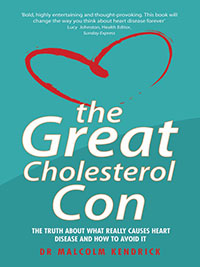
If you would like to do more research about statins, I suggest you read the Great Cholesterol Con by Dr. Malcolm Kendrick. This is important if you even think that doctors are doing you a favor by prescribing statins to you.